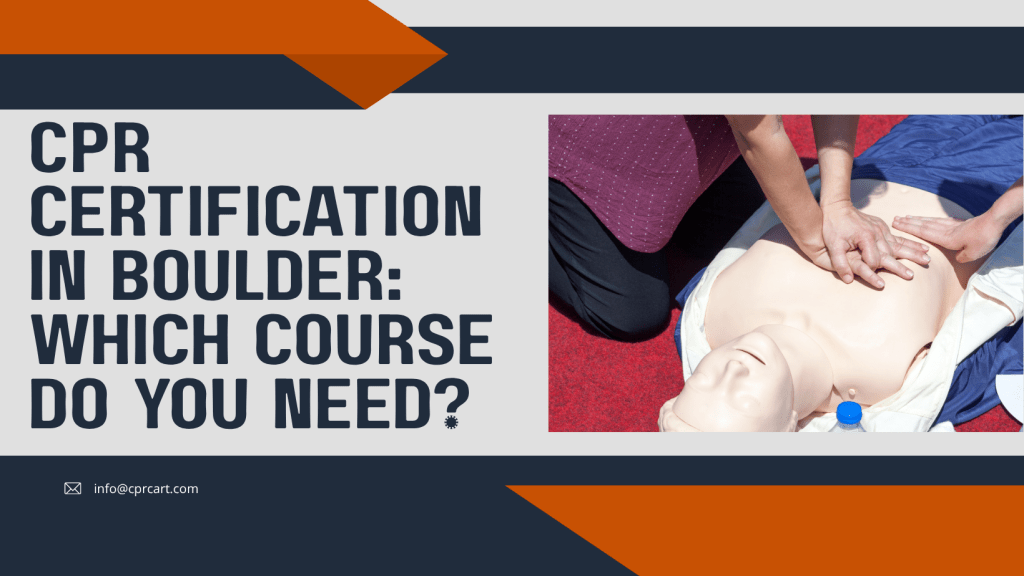
In a community as active and health-conscious as Boulder, the ability to respond to a medical emergency is invaluable. Whether you are a healthcare professional needing to renew your credentials or a resident wanting to be prepared for the unexpected, obtaining your CPR Certification in Boulder is a vital step.
However, medical training is not one-size-fits-all. There are distinct differences between various levels of certification, and enrolling in the wrong class can be a waste of time and money. This post will clarify the specific roles of a BLS Course, ACLS Course, and PALS Course, ensuring you sign up for the training that matches your career path and personal goals.
Understanding the Basics: The BLS Course
For most people entering the healthcare field, the BLS Course (Basic Life Support) serves as the entry point. While “CPR” is a general term used by the public, BLS is the specific level of training required for doctors, nurses, EMTs, and other professional rescuers.
A BLS Course differs significantly from a standard layperson CPR class. It focuses heavily on the “Chain of Survival” in a clinical setting. Participants learn how to perform high-quality CPR on adults, children, and infants, but the training goes much deeper. Key topics include:
- Team Resuscitation: Learning to lead and participate in a multi-rescuer scenario.
- AED Operation: Gaining proficiency in using an Automated External Defibrillator.
- Airway Management: Using bag-valve-mask devices to assist breathing.
If your employer has requested proof of CPR for a clinical position, they are almost certainly requiring a BLS certification. It is the foundational skillset required before moving on to more advanced life support training.
Advancing Your Skills: The ACLS Course
Once you have established a solid foundation in basic life support, you may be required to take an ACLS Course (Advanced Cardiovascular Life Support). This certification is designed for healthcare providers who either direct or participate in the management of cardiovascular emergencies, such as those working in Intensive Care Units (ICU), Emergency Rooms (ER), or as paramedics.
The ACLS Course expands on the principles of BLS by introducing pharmacological interventions and electrical therapy. The curriculum emphasizes the importance of continuous high-quality CPR alongside advanced medical treatments. Students in this course will learn:
- ECG Recognition: Identifying life-threatening heart rhythms like ventricular fibrillation.
- Pharmacology: Understanding the administration of drugs used to treat cardiac arrest and stroke.
- Post-Cardiac Arrest Care: Managing patients immediately after return of spontaneous circulation (ROSC).
Because it deals with complex decision-making and drug administration, an ACLS Course is typically mandated for advanced medical roles and provides the skills necessary to lead a resuscitation team effectively.
Specialized Training: The PALS Course
Treating infants and children requires a unique approach, as pediatric emergencies differ significantly from adult cases. A PALS Course (Pediatric Advanced Life Support) is tailored for healthcare providers who treat pediatric patients in emergency, intensive care, or critical care settings.
In a PALS Course, the focus shifts to a systematic approach to pediatric assessment. The goal is to recognize and treat respiratory distress, shock, and cardiac arrest in children and infants before the situation becomes fatal. Key learning objectives include:
- Pediatric Assessment: Using a systematic approach to identify respiratory and circulatory problems.
- Respiratory Management: Treating upper and lower airway obstructions unique to pediatric anatomy.
- Vascular Access: Establishing intraosseous (IO) and intravenous (IV) access in smaller patients.
For nurses, physicians, and paramedics working in pediatrics, this certification is just as essential as an ACLS certification is for adult care.
Choosing the Right Provider in Boulder
When searching for CPR Certification in Boulder, verify that the training center is accredited by a recognized organization, such as the American Heart Association (AHA). Many employers will only accept certifications from specific accrediting bodies.
Additionally, consider the format that works best for your schedule. Many providers offer “blended learning” options, where you complete the cognitive portion online and then visit a training center for the hands-on skills session. This flexibility is perfect for Boulder’s busy professionals and students.
Conclusion
Navigating the world of medical certifications doesn’t have to be complicated. If you are starting your career, start with a BLS Course. If you are advancing into critical care for adults, look for an ACLS Course. If your focus is on the youngest patients, a PALS Course is the necessary credential.
By securing the right CPR Certification in Boulder, you are not only advancing your professional career but also joining a community of life-savers ready to protect the health of those around them.
 Learn CPR Today: A Simple Skill That Can Save Lives
Leave a comment